
In 2026, the Democratic Party must defend the only three seats it currently holds on the 15-member N.C. Court of Appeals. We recently met with Judge Christine Walczyk, the Democratic candidate for the seat currently held by Judge Allegra Collins (who is not seeking re-election).
Judge Walczyk has been a Wake County district court trial judge for 19 years. Previously, she practiced law in Raleigh, representing small businesses with their transactional and litigation needs. She also represented indigent defendants in criminal cases and juveniles in delinquency matters.
Below, she discusses her pitch to voters; the chronic under funding of our courts; her growing concerns about the politicization of the judicial branch; and more.
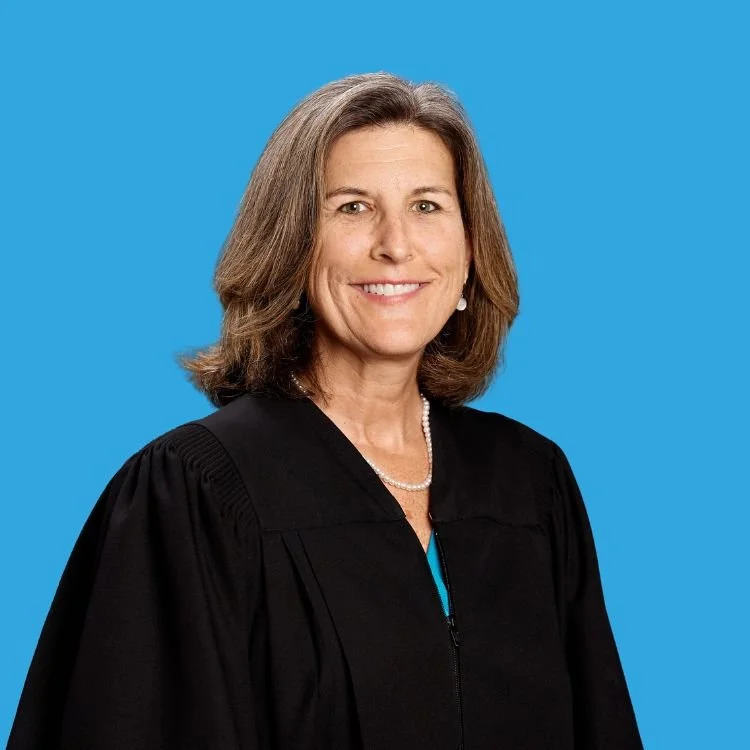
Why are you running for N.C. Court of Appeals? This represents a shift for you.
I'm happy where I am. I love my job. I have been doing it a long time. But in the last 10 years, I have seen more attacks on the judiciary. I've been seeing the courts get more politicized. People are losing trust and confidence in it. So I had this sort of growing sense of concern. And then last year, my friend Judge Allegra Collins called me and said, “I'm not gonna run [for re-election].” And knowing that she's the only Democratic woman on the court, I had a little bit of a panic attack. She is a great and excellent judge. And I just can't imagine a court without one single Democratic woman on it. I thought a lot about – is this something that I could do? Is this something I should do? And I have to be honest, I thought about my father. I had lost my father at age 54 to a brain tumor. I turned 54 last year. So I had a lot of feelings about it. I had lots of thoughts about my mortality. I can either coast into retirement, or I can step up and fight for the things that I believe in. And I like to listen to Brene Brown. I heard her in my head saying, “We have to choose courage over comfort, and we have to get in the arena.” And so I decided to do it. Here I am.
How would you summarize your judicial philosophy?
First and foremost, I believe in due process. In equal access to justice. In equal protection under the law. I think everybody deserves a fair hearing. I don't believe that your race or your gender or your political affiliation or your sexual orientation should have any impact on the outcome of your case. I think everybody who comes into my courtroom needs to feel like they've been heard. They've been respected. They feel safe in my courtroom. But most of the time when people ask me about this, they mean how I interpret statutes. I generally don't like those labels. I don't think judges say about themselves, “I'm a textualist” or “I'm a living document [judge].” We don't talk about ourselves that way. Those are labels that people who are trying to sort of pigeonhole us, they refer to us that way. What I try to do in every case is just apply the law thoughtfully and faithfully. I pay attention to the words, the purpose of the words, the practical consequences of the words, and, of course, I'm always guided by judicial restraint. I believe in precedent. Because society needs consistency, stability. Part of the rule of law is that we know what the law is, right? It's good for a safe and orderly society to have consistency and to understand what the law is.
But, at the same time, the constitutions – both of them, the North Carolina one and the U.S. one – those are our guiding stars. And when we look at those, we have to understand that society evolves. And moral values change. We have to look at it through that lens. And, inevitably, you're going to have cases that get reversed. The example I always give everybody is Brown v. Board of Education, which overruled Plessy v. Ferguson. It basically ended the legal basis for segregation of schools. Another example that’s common? Loving v. Virginia, which ended bans on interracial marriage. Over time, society evolved and grew, and those things needed to be reversed because they were wrong.
How does the Court of Appeals affect the lives of everyday North Carolinians?
The courts – we're the guardians of the constitution. We're the protectors of your liberties – all judges. If I make a decision at the trial level, I'm deciding disputes between your neighbors. And so, those particular parties in that particular case, my decision affects them tremendously. But the Court of Appeals has a much broader reach. So if somebody's not happy with my decision [as a trial judge], they can appeal it to the Court of Appeals, and the Court of Appeals will say whether I made any errors of law or not. And if they publish that decision, then it sets precedent.
That means that trial judges all over the state of North Carolina have to follow it, and they're making critical decisions about all kinds of things – housing rights, workers’ rights, your right to parent and educate your children, your right to vote. All of these things affect you. And I don't believe that the Court of Appeals gets the focus and the attention that it deserves, frankly. In 2023, the legislature eliminated the automatic right to appeal in the event of a dissent. So the Court of Appeals has 15 judges on it; they sit in panels of three. And in the past, if one of those judges issued a dissent, then you could automatically ask the [state] Supreme Court to review that decision, but that's been eliminated. So what that means for North Carolinians is that for a large portion of the cases, maybe 80% of them, are going to end in the Court of Appeals. It's the court of last resort. So to me, the Supreme Court is important, but the Court of Appeals, we can't neglect it. It's equally as important, and we have to give it the attention it deserves, and you have to understand that those decisions do affect your lives.
We hear in the news about the high-profile cases, but they do everything from custody cases, child support cases, car accident cases, business disputes, domestic violence, when you're asking for restraining orders. All kinds of criminal cases, DWI. Everything that can affect your life, it's going to the Court of Appeals first.
What's your pitch? Why should people vote for you this November?
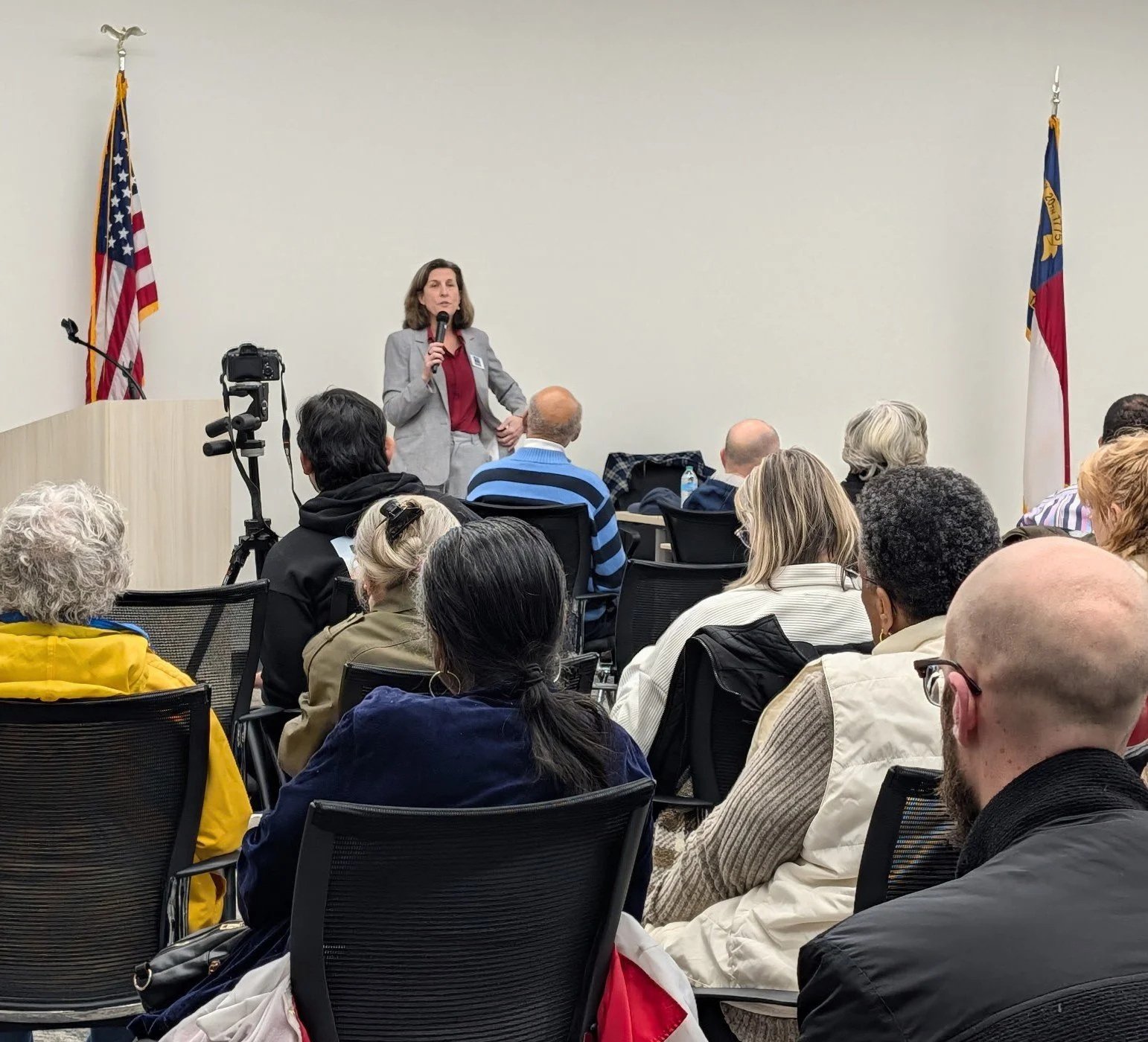
I've been a trial judge for 19 years. As a trial judge, I was appointed to leadership positions by four different chiefs, both Democrat and Republican. I was the lead family court judge for many years. I'm currently our lead civil court judge. And before I was a judge, I owned my own law firm with Senator Grafstein, for over a decade. And we started that firm in the ’90s. We were one of the few, maybe the only, female-owned firm back then. And we did that so that we would have the freedom to sort of represent the little guy and be a voice for the marginalized. Now, as a judge, I'm battle tested. I've been making difficult decisions in the public eye for a long time. I've learned to handle the pressure and the criticism that comes with being a judge. And I think being a statewide judge will have that same criticism and pressure.
Over the course of my career, I've spent a lot of time trying to support women in the legal profession. I've spent a lot of time trying to level the playing field for self-represented persons, but, most importantly I think, I've spent 19 years trying to show up as a judge that has integrity, that the public's going to be able to trust. And I think in these challenging times that we're in, what we need is skilled and experienced judges that are going to have the moral courage to safeguard the individual liberties that our constitution guarantees. And I'm talking about the right to free speech, the right to be free from unreasonable searches and seizures, access to public education, the right to vote. I want to build a more independent court that's free from the influence of the General Assembly. I want to build a court that's stronger and more balanced and actually has the ability to serve its purpose of keeping those other two branches within constitutional bounds. And I want a more diverse court. I’m going to say it. When I win, I'm going to be the only Democratic woman on that court. And I think Democratic women bring a unique perspective, and we deserve a seat at that table.
What is something you would change about how the North Carolina courts work?
There's so much. Too much. But the undercurrent of everything is: We are underfunded. We only get a little over 2% of the budget. We never have enough clerks, we never have enough judges, we never have enough prosecutors, we never have enough defense attorneys, and we never have enough software. Just all of the things that you need to run a court system efficiently and effectively – we don’t have it. And so how that translates to people appearing in court is: They're coming back to court multiple times to have their cases heard. Sometimes, we'll have 100 cases in a day at the trial level. And you cannot hear 100 cases in a day – you just can't. And so people lose their jobs coming back. People can lose their childcare. Two percent just seems extremely low to me.
And we also have areas around the state of North Carolina that, as lawyers and judges, we refer to as legal deserts, where we just don't have enough court-appointed attorneys to represent the people that need attorneys, that are entitled to them under the law. You'll have attorneys representing people in multiple counties, and they're overworked. They're underpaid. And in civil cases, it's just cost prohibitive to even hire an attorney at all. You can't get a court- appointed attorney in a civil case. So if somebody's asking for a restraining order, for example, that can have serious implications on your job if it's granted, but it's not a criminal case, so you can't get a court-appointed attorney. Trying to represent yourself is extremely difficult, even for people who are intelligent and have training. If you don't have legally specific training, you're not going to know what the timelines are and the deadlines and the procedural nuances that you have to understand to survive dismissal.
One of the things I've tried to work on in my career is trying to alleviate some of that and try to level the playing field. I am on the advisory board for our Legal Support Center in Wake County, which is an organization that we set up in 2023. It's inside the courthouse. It matches people up with pro bono attorneys and legal resources. One of the things I tried to do was draft forms, sample forms, informational packets. If you need to get divorced and you have to serve the other party, here's what the rules are about service. Just instructional things, so that people can have a chance to figure it out on their own. Anybody can go in there. Just having a notary in the building is helpful to people. And I also helped train a lot of pro bono attorneys. For example, if you're a real estate attorney, but you're willing to help somebody who's a victim of domestic violence, but you don't know how to do it, I did a lot those trainings for people so that they could sort of step outside of their comfort zone and help people pro bono. There's so much more work to do statewide. I would like to continue this work at the Court of Appeals.
Voters will be electing three people to the Court of Appeals in 2026 – the only three seats currently held by Democrats on that 15-member court are up for grabs this fall. Your fellow Democratic candidates are seeking re-election – Judge Arrowood and Judge Hampson. Can you say a few words about these incumbents?
I'll start with Judge Arrowood. First of all, I would say he's very smart, well-respected by attorneys on all sides. He's got a broader range of experience than most people – he's done a little bit of everything. He was a prosecutor. He also worked in the Federal Defenders Office. And he worked for many years at a really prestigious firm in Mecklenburg County – James McElroy, and Diehl. So he's got civil experience, criminal experience, all of it. If I was just going to sum him up in a word, the word would be brave because he lost both of his parents when he was very young. I think he was 14 or 15. He was raised by his brother, and he was able to finish his education really sort of on his own. And now he is and he was the first openly gay judge on our appellate court and, I think, in any appellate court in the South. He's definitely been out there supporting the LGBT community.
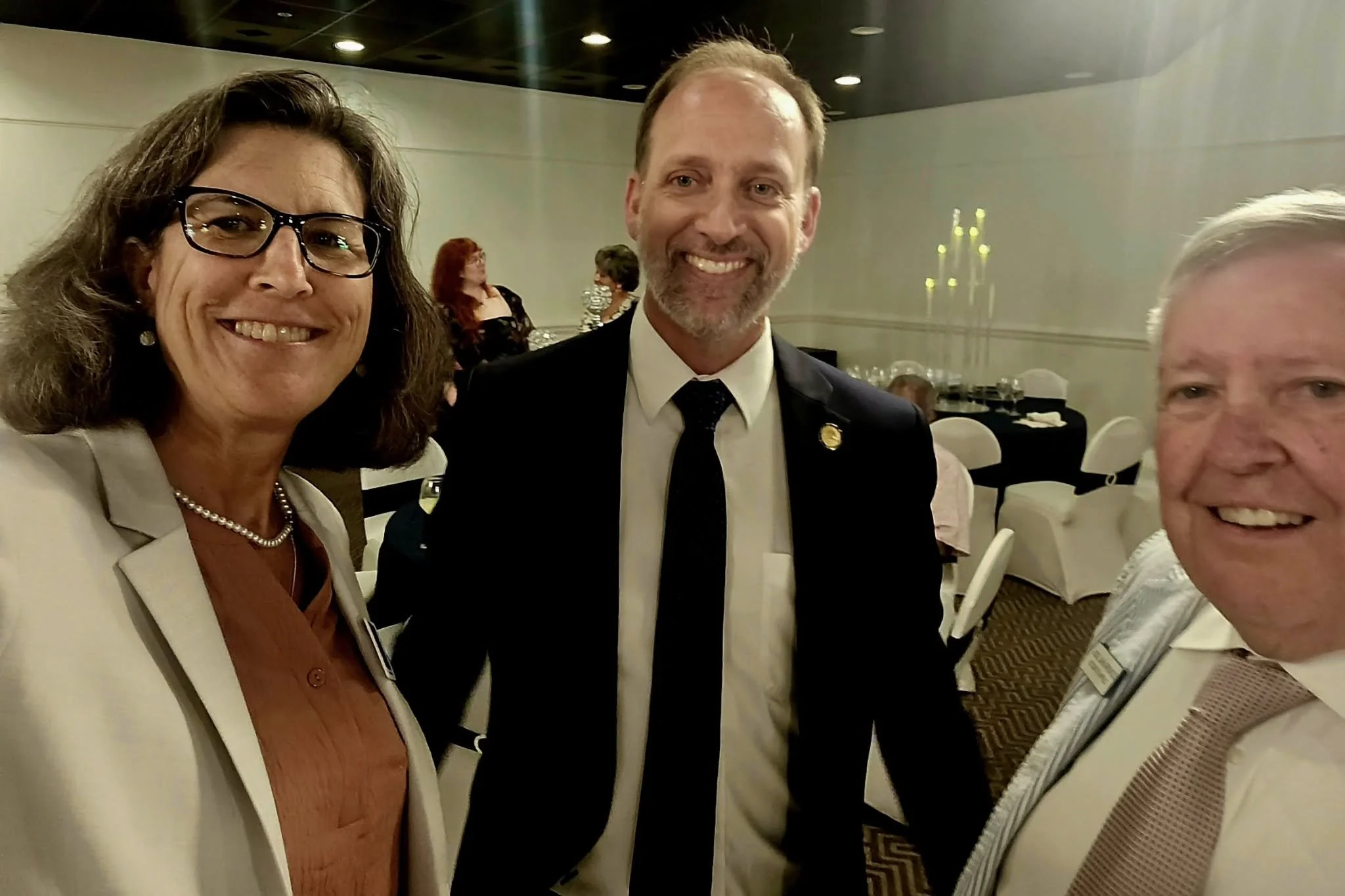
Judges Walczyk, Hampson, and Arrowood
Judge Hampson – he's another brilliant jurist. He is an appellate specialist. This is what he did before he got to the bench – appellate law. I think he clerked for multiple Court of Appeals judges. And he worked really closely with another Court of Appeals judge that everybody loved and respected, which was Eddie Greene, at his firm at Wyrick Robbins. He just has so much experience that he can pull from. And he's written some notable opinions. The one I would point out is his dissent in the Griffin case recently. It came up through our courts, but then afterwards, it went up to the federal courts. After that, that's when Judge Griffin conceded. I don't know if that opinion [by Hampson] made an impression on the federal judges or not. But it was well written. He's just a great dad. When he is not campaigning, he has all kinds of sporting events with his kids. He's either at cheer, soccer, volleyball. He does all of it, and he's an all around good guy.
What do you think voters should know about Justice Anita Earls, who is seeking re-election on the State Supreme Court?
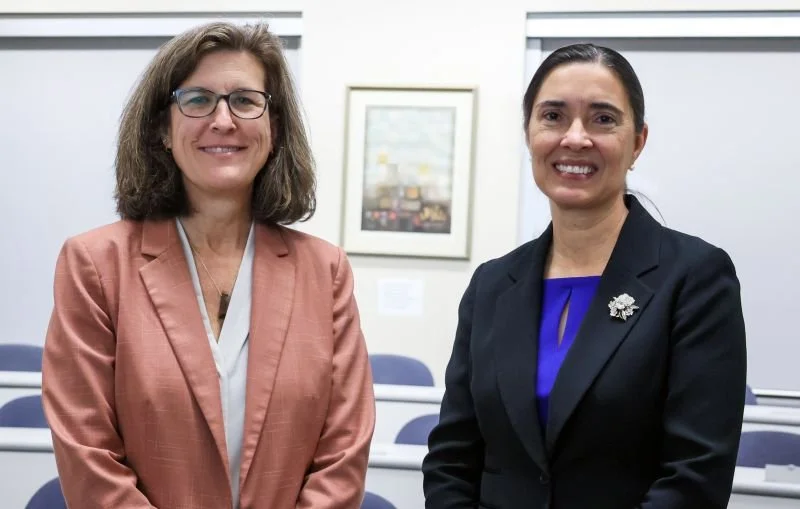
Judge Walczyk and Justice Earls
I did not know her before I started campaigning with her. First of all, she's extremely intelligent – very strategic mind. She understands constitutional law, but more important for voters, I think, is that she has such a great heart. Everything she does, and every decision she makes, is to help the people of North Carolina and to make our lives better. You have someone who's basically accomplished everything that a lawyer can accomplish in their lives, right? She worked for one of the most prestigious firms in North Carolina, Ferguson Stein. She started her own nonprofit, the Southern Coalition for Social Justice, a very successful entity, and she ran that organization for many years. She's been a Supreme Court justice since [she was elected in] 2018. This is someone who could be resting and relaxing. Instead, she's traveling all over the state. To me, she's a true trailblazer. I don't know anybody who's more equipped or more qualified for this position that she's running for.
FLIP NC is committed to bringing attention to state judicial races. Explain why that’s important – to pay attention to all judicial elections, all the time.
Courts are the guardians of your freedoms and your liberties. Democracy, to me, depends on strong courts, and strong courts require skilled and experienced people and good judges who are going to be true to their oaths and their ethical standards. We're your first and your last defense when it comes to overreach, when it comes to abuses of power, when it comes to people trying to take away our rights. And the good news about that is: In North Carolina, we get to pick our guardians; we get to elect them. It's in the constitution. We get to decide who's going to represent us in determining what is the law. And how are we going to hold those accountable who violate the rule of law? So I think in the last 10 years, this has become more important because of the politicization. We can see attacks on the courts. We can see dark money trying to buy judicial seats and control the courts, and we've got to stand up for this institution because once it's gone, it's gone.
I tell people: If you look at some of the other countries around the world that have experienced democratic backsliding, they all had attacks on their judiciary first. Places like Poland and Turkey and Brazil. And so we might have taken it for granted the last 200 years or so, but we can't do that anymore.
Especially in the judicial races, this is a place we can make a difference. These statewide races are not going to be gerrymandered, you know? And they're going to be won or lost by razor-thin margins. Justice Beasley lost by 401 votes, and Justice Riggs won by 734 votes. And when you think about how many votes that is, you know, we're in a state with a hundred counties, that's eight votes per county. So we can make an impact in those races. If you're not getting involved, if you are not observing court, serving on juries, voting for your judges, I don't know how you complain when it's not working for you.
FLIP NC is extremely disturbed by the ways the courts have moved to the right. GOP extremism is very prevalent. Can you speak about extremism on the court and your views about the damage that does?
I have to be a little bit measured in this answer, but I will say that you're not alone in losing trust in the courts. And this is a problem. I mean, I saw a 2024 Gallup poll that said that only 35% of the public trust the federal judiciary. Now it's higher for the state courts, but it's still at an all-time low. And to me, why this is so critical is because the courts have no enforcement arm of their own. Our sole source of power and our sole authority comes from the public's trust in this institution and its trust in our decisions. And so when we lose that trust, the court system as a whole is weakened. And I just don't believe that weak courts are going to be able to stop abuses of power. They're not going to be able to keep the other two branches within constitutional bounds, and they're not going to be able to protect your individual liberties. If we have a court that's all the way to the right, the left won't trust it. If we have a court all the way to the left, the right won't trust it. What I believe we need is balance. I personally don't think we should be running under partisan labels, but here we are. We have to win these seats right now. But if you want to run as an independent right now, you have to get something like 82,000 signatures to run, and nobody can do that. So this is the system we've set up. We have to run in these partisan races. But to me, it adds to the politicization, which reduces the trust, which makes the courts weaker.
I've been annoyed, as you are, that my opponent calls himself a conservative judge. And the reason that bothers me is because, when I was growing up, conservative meant that you believed in traditional values and norms. That meant you wanted free markets and individual liberties. You wanted limited government interference in your life, right? And I just don't think Republican judges should be able to use that word anymore. Because, frankly, they are choosing a party that wants to interfere in every aspect of our lives. They're standing with a party that is dismantling our democratic norms and traditions – things like separation of church and state, birthright citizenship, due process. These basic things that we've come to understand as our traditions. And then they're also aligning themselves with a party that's rolling back our rights and messing with the free markets on a daily basis. So when you look at all those things, I just think, in this bizarre time that we're living in, it's the Democratic judges that are going to be the ones that are going to conserve our democratic norms and traditions and preserve our liberties and hold people accountable that violate the rule of law. And so, courts are supposed to be non-partisan, but we just have a lot of politicians lately who want to be on the court. And I think the court needs to be independent. It needs to be free from that influence of those special interests. It needs to be free from the General Assembly, from partisan politics. And we just have to work in our own universe, so this is why I'm running, to build the kind of court that North Carolina needs.
You’ve been hard at work – traversing the state, reaching out to voters. What are you hearing from them?
I hear different things from different people, depending on what community you're in. But overall, I would say voters are concerned, and they are anxious. I have had people ask me: Are we even going to have an election in 2026? And I say: Yes, we are going to have an election. But I can see the anxiety when those questions are asked. And when it comes to the courts, specifically, I sort of hear: We need to be more independent. We need a stronger court. We need it to be non-partisan. But I have had multiple people say: I don't want a fair and impartial judge, I want a good Democrat, you know? And it makes me chuckle, but I understand both of those feelings. I think that we need independent and impartial judges, but we also need judges that are going to be willing to stand up and defend our constitution and stand up for our liberties. I think what they're really saying is they want people who are going to safeguard their liberties. And I'm assuming they want people to stop abuses of power. So I don't think those things are totally opposite to each other, but they just want people who are going to protect them and who are to stop sort of the chaos that's going on.
What’s your advice to anyone seeking to get involved this year? To anyone who is planning on talking to voters in the coming months?
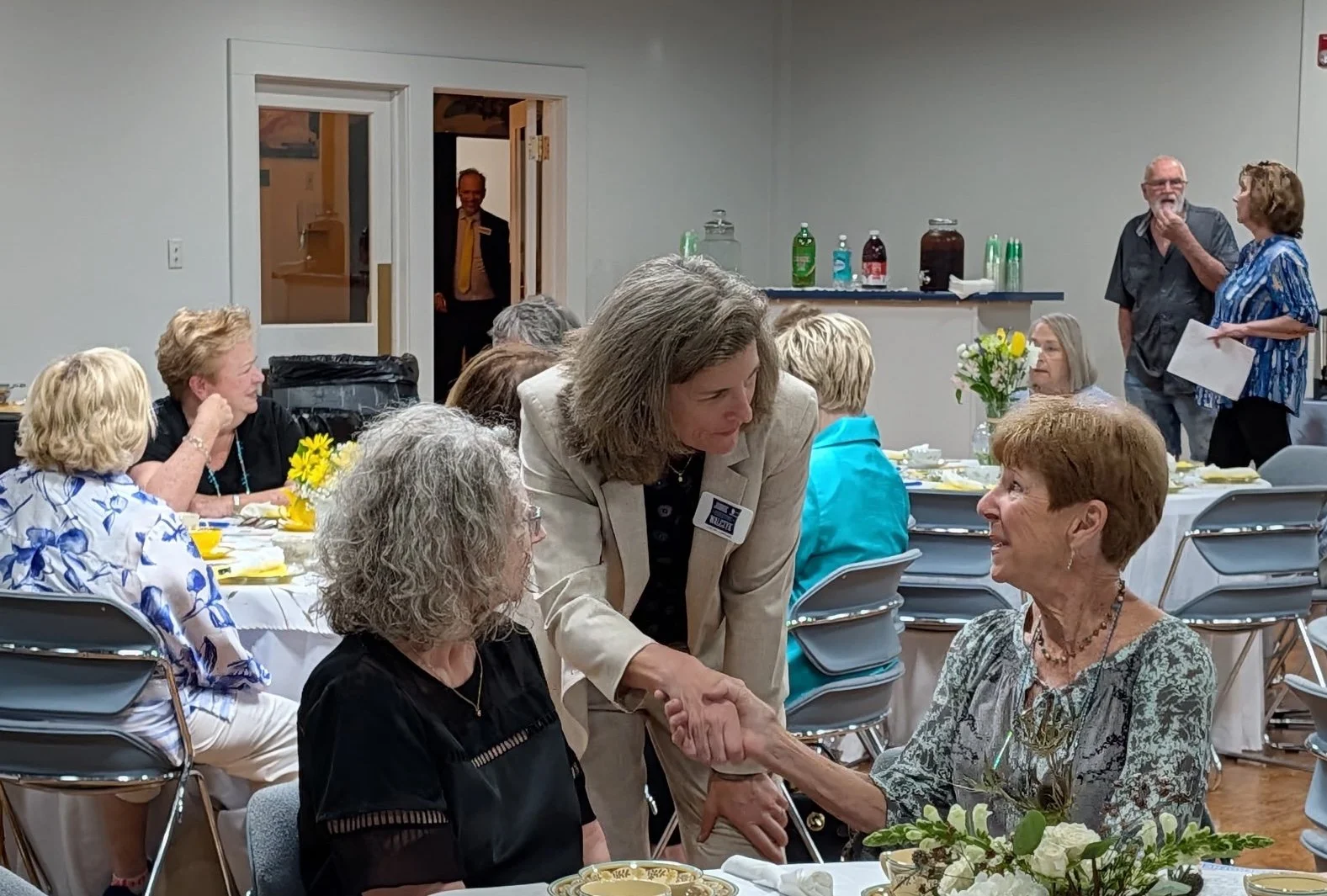
First, I would thank them because democracy requires participation. We need those people to step up and do those things. Secondly, I would remind them how much power they have, about the fact that we only need eight [additional] votes per county to win some of these races. Each and every person can find eight votes. You can get eight people – eight of your neighbors or your friends – to come to the polls. Republicans will vote straight ticket, but Democrats want to know their people before they vote for them, and that's the responsible way to vote. But we gotta convince them.
I have the slow mantra that I say in my mind that has really made me think about our voters. And that's: “Don't blame the lettuce.” Thich Nhat Hanh – he's a Buddhist monk – he's referring to a farmer who grows lettuce. If it's not doing well, it's wilty or whatever, he doesn't blame the lettuce. He gives it the sun that it needs. He gives it water. He gets the bugs off of it, whatever. And if you understand what the lettuce needs, you can improve the situation, but blaming it doesn't do anything. And so I'm thinking this way lately about voters. We can't blame the lettuce; we have to understand what the voters need. And meet them where they are and figure out what they need to come and vote in these judicial races. And what tools do they need? What do they want to know to check the box on these judicial races? And if we have that understanding, I think we're going to be able to improve the situation. What I would say to the people that are going to talk to voters is: Meet them where they are and figure out why they're not going to vote and what the problem is, and let's give them the tools that they need.
Blame gets us nowhere. We just have to understand people. And I think that's part of our problem in our society right now. You know, we're not talking; we are so polarized. We're not having the conversations we need to have. I think there is some consensus on some things. We just can't figure out what that is – because we're not speaking.
How can folks help you in the months before the election?
There's so many ways. Of course, we always need money to get our message out. Obviously, the money helps us target voters. We have to reach voters multiple times to get name recognition. We’re going to be doing radio, mailers, digital media, social media, all this stuff. But if you're not in a position to do that, we also need volunteers. We need people who are going to make calls, knock on doors, write postcards, repost our social media messages. Sometimes it's something as simple as that. If you have 900 followers and you repost my post, you just reached people for me. And that's free and easy to do. There's also an initiative called Team Field Justice, which is a joint thing with the N.C. Democratic Party, where they are doing an on-demand canvassing effort. So in your own neighborhood, on your own time, they will help you canvass your neighborhood for all the slate at once – Justice Earls, Judge Arrowood, Judge Hampson, and myself. That's a really good way to do a lot of work in a little bit of time. Find me at judgechristine.org.
It’s not the easiest time to be in government, and it’s not the easiest time to be a candidate for office. What is providing you hope these days? Where do you turn to for joy and laughter in these heavy times?
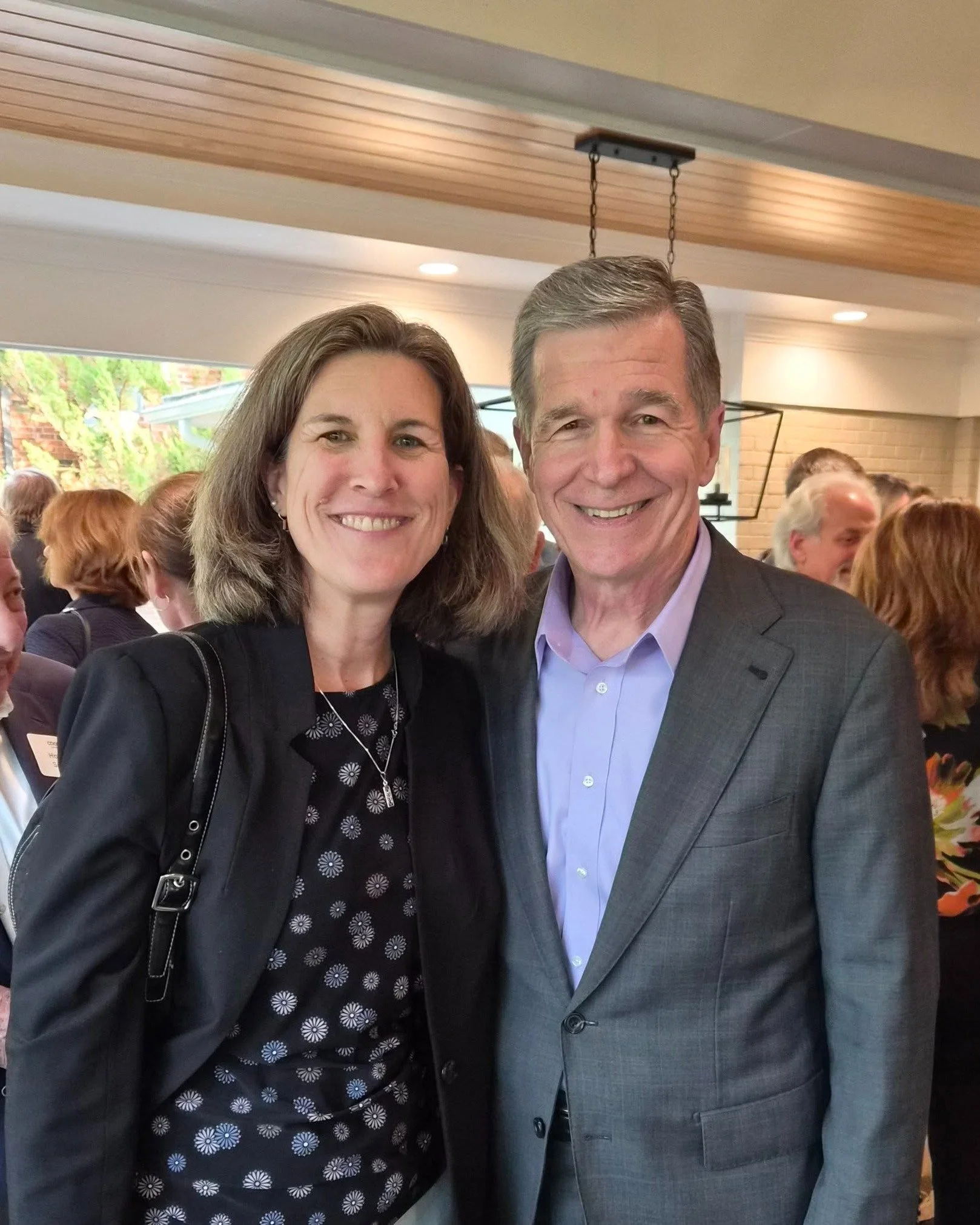
Judge Walczyk and Gov. Cooper
The hope question first. You know, going around and seeing how many people care about our world and care about government, especially our courts. I have run five elections in Wake County. I've never seen it like this. The judges didn't get a lot of attention in the past, but now people care. They understand now. They've seen what's happened, and they are motivated. I watch the people at these rallies, with their signs and everything. People are so clever. One thing I love about being a Democrat is that we have a tremendous amount of talent. Tons of musicians, comedians, artists. People who love life, and people who are hopeful and positive. I just enjoy that. It makes me laugh out loud when I see some of the signs people come up with, and that's what gives me hope. There's just some really good people that just want to do good in the world out there. When people come up to me and say: “Thank you so much for running. We just appreciate you.” That gives me hope.
I have got to have humor in my life. If you're funny, you're going to be my friend. That's how it is. And I love live music. I love comedy. I love live sporting events. It's funny because I'm an introvert, but I just love being in that interaction with people. I'm a ’80s girl, but all kinds of music – everything from AC/DC to the Indigo Girls – I'm gonna be at that show, you know? And I also love college sports, and I will be rooting for the Hurricanes in the playoffs. I'm not having time to do any of this right now, but in general, these are the things that I do when I have a life.
North Carolina-Themed Speed Round
Favorite N.C. Attraction or Landmark
I am a beach person. I was born in Raleigh, but I spent a lot of my childhood in south Florida. But as far as attractions, I'm gonna say the Smoky Mountains National Park. I love to hike. I love the waterfalls. I love rafting. I love all that.
Favorite Annual Tradition in N.C.
I'm going to go with Pride. They do multiple months now. But every year, they get bigger and better, more fun. I love the music, the laughter.
Favorite N.C./Southern Food
I haven't eaten meat in almost two decades, but I used to love barbecue. So I'm going to say the sides to the barbecue. The collards, the black-eyed peas, and the coleslaw. I love all the Southern veggies.
Favorite Way to Enjoy N.C.’s Great Outdoors
I gotta say the beach. All of our beaches are beautiful. Surf City, Wrightsville, Topsail, Outer Banks. I think my perfect day is: I drive from Raleigh to the beach. I sit on the beach all day. I stop at Blue Water Cafe or some other restaurant on the water, listen to a band, and come home.
Favorite Artist or Celebrity Associated with N.C.
Mia Hamm. She's a superstar athlete. I'm a huge soccer fan – been playing soccer since I was 8 years old. And I saw her at the 1999 World Cup – Giants Stadium. Opening. She scored a goal. She's changed the game of women's soccer forever. She's my favorite.
Favorite Book or Movie Associated with Our State
So it's going to be the book, although I did see the movie with Nicole Kidman. But Cold Mountain was a good book. As always, the book is better than the movie.