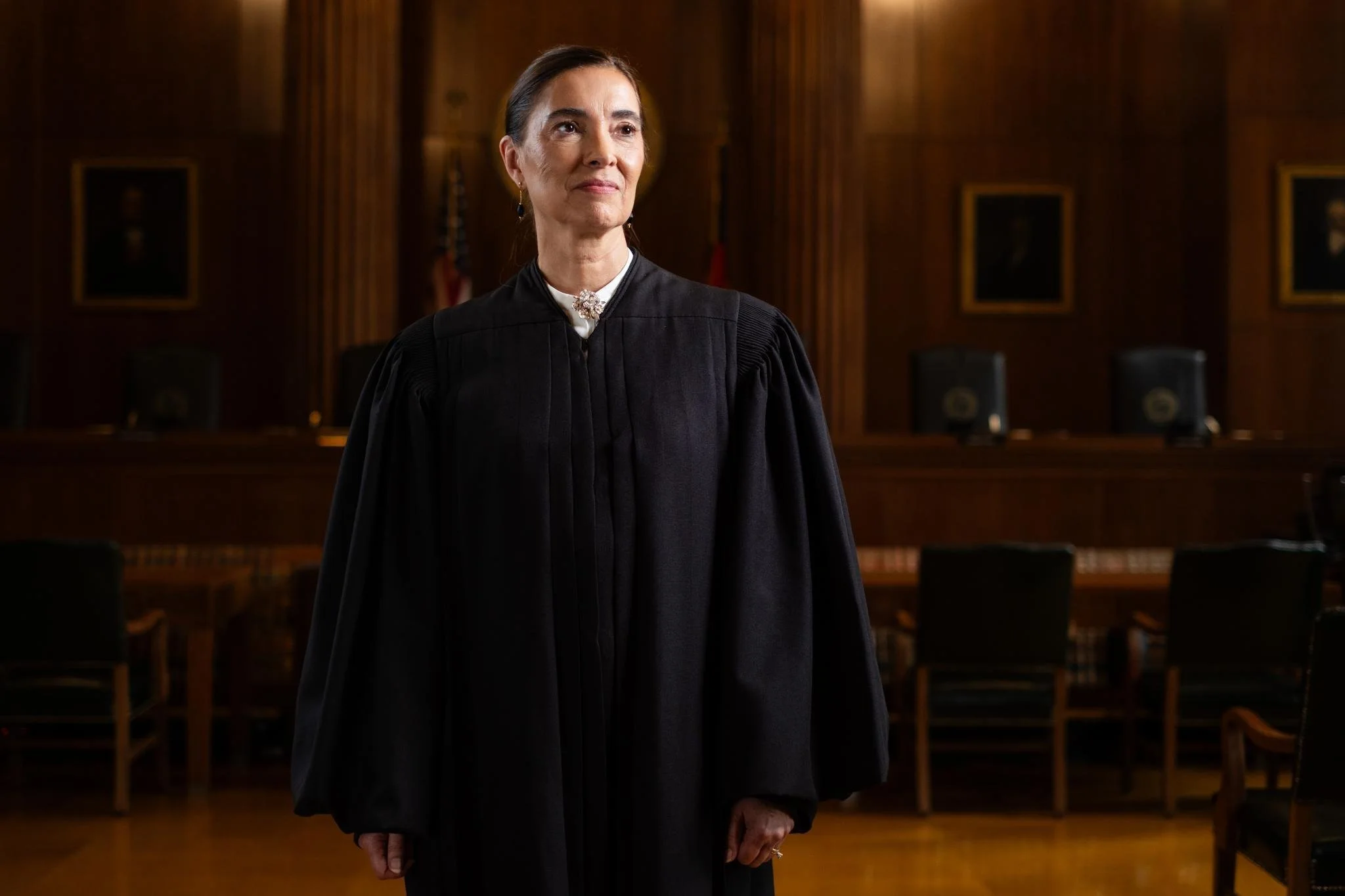
We recently met with Justice Earls, one of two Democrats on the N.C. Supreme Court, who is defending her seat in November’s election. In this wide-ranging conversation, she talks about her recent fiery Leandro dissent, the fallout from 2024’s bitterly contested Supreme Court race, her concerns about the state of our democracy locally and nationally, and what’s offering her hope and joy during these trying times.
On What’s Happened in Our State and Nation Since the 2024 Election
We had a sense that things were going to be challenging – respecting people's rights and continuing to have a goal of justice for everyone. What we now appreciate is two things. One, is just how jaw-droppingly horrible it actually is. Some of the things that have happened at the national level, I would have never thought could happen in a democracy. And similarly, at the state level, some of the positions that the state legislature has taken, some of policies that have been enacted, are much more draconian than I would've expected, even understanding where the power dynamics are in our state. I talked to a former professor at UNC whose research was on violence against pregnant women, and her job was terminated. UNC said – “no, you can't do that research anymore.” Who could fathom that we would have people in power who think it's a good idea to end those things? That’s just a micro level. We could talk about what has happened on the world stage, what our country is doing in other places.
On the one hand, we now understand the contours of what it means to have people in power with the agenda that the current folks in power have. On the other hand, we've seen the power of resistance. And Justice Riggs' fight for over six months to not give in to the efforts to throw out ballots in her election shows that when we stand up to injustice, we can win. And what I hope people will appreciate is – there were many days when she came to the courthouse not knowing whether she'd have a job the next week, right? Because it was never clear when it was all going to be over, how it was going to be resolved. She was still sitting on the court. We were having oral arguments; she still had to do all her court work. She had to raise $4 million, something like that, and every day she was having check-ins with her legal team. They were litigating in three different courts, so sometimes federal district courts, sometimes federal appellate courts, state courts. People may not appreciate just what a struggle it truly was and how much work – there's only so many hours in a day. But also the courage, the heart that it took.
She said two things that I think people should remember. She said, “I will never challenge the ballot of a legitimate voter.” People would ask her: “Jefferson Griffin has challenged ballots in heavily Democratic counties. Why don't you challenge the same ballots in the heavily Republican counties? Because why should it be fair that you can vote without the last four of your social, if you live in a Republican county, but you can't if you lived in Guilford or Buncombe or one of the Democratic counties?” And to her credit, she was just unwavering in the conviction that, as a voting rights attorney, she was standing up for everyone's voting rights. Not just Democrats' voting rights – but everyone's.
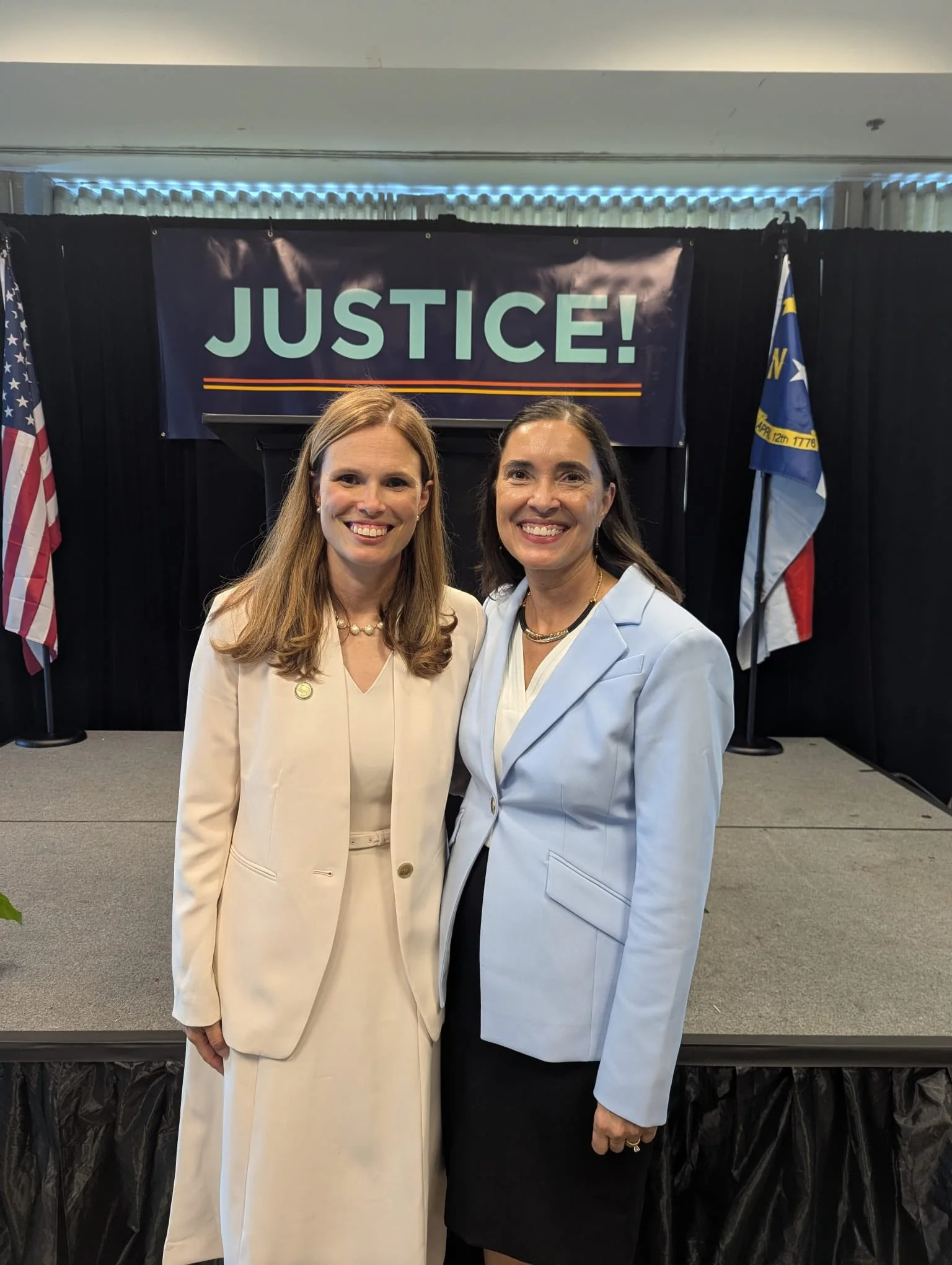
Justice Allison Riggs and Justice Anita Earls
But the second thing that she did that is so remarkable is she understood that it was all the volunteers across the state who, number one, cured ballots in the 10 days that she had. (One thing that's different is we will only have three days, actually two and a half days, in 2026.) It’s called curing ballots, but what it really is is standing up for the voices of every voter and saying to voters who were at risk of their legitimate ballots not being counted, that no, this person's vote and their voice in our democracy matters. And there were volunteers across the state who put in their time and effort. Could have been doing other things. They gave up their time and energy and effort to try to make sure that their fellow citizens were heard. Those two examples of ways in which people stood up for our democracy has got to give us all heart and courage to go forward.
On More Emphasis Being Placed on the Importance of Judicial Races
That's naturally what has to happen because the effort on the other side, the Republican side, is to – in North Carolina, certainly – make the courts irrelevant when it comes to protecting people's rights. Whether it's your right to vote, your child's right to a sound, basic education, workers' rights, consumers' rights, the right to a clean environment, you name it. If it's impacting ordinary folks, our court is taking a step back and saying, “Oh, we can't enforce those rights. We have no power as a court to do anything about those things.” And yet, if we want to talk about other kinds of rights, like property owners’ right to be compensated if there's a highway built over the land, when that happened, our court said very clearly: “State of North Carolina, you have to give these people money.” We weren't fussing around about whether we had power or not. We understood that we were enforcing rights. And understand: I think property owners should be compensated. My only point is children should also be getting their rights under the constitution. Women should have their rights protected. People of color should have their rights protected. The reason why courts are getting more prominence and understanding now is that we realize that, without that branch of government being a co-equal branch that holds the other two branches accountable to the state constitution, then we don't have the kind of government that we believe we should have in this country.
On How the State Courts Affect North Carolinians’ Everyday Lives
With political advertising, the Republican brand has been: “We lock them up, so vote for us.” And, of course, we all want to be safe. Public safety matters. But our courts do a whole lot more. And when I say “lock them up,” I'm referring specifically to the infamous banjo ad that [now Chief Justice] Paul Newby ran when he came on the court the first time, and then he used it again in his re-election – the same ad. And what always struck me as infuriating about it is that as a member of the Supreme Court, we don't lock anybody up. We do not issue orders for arrest. That's what trial courts do. That is what your local judges do. So, it was misleading to begin with. But the bigger point is: Yes, we are making important decisions that impact criminal justice. And in fact, a lot of my work since I've been a justice has been to try to improve the criminal justice system. But we also do so much more that people don't realize affects their lives. We review the utilities commission. That means we decide ultimately how much you pay for electricity and whether Duke Power can, for example, pass on to consumers the cost of cleaning up their coal ash that was dumped in the rivers. We are going to hear arguments about whether or not the attorney general has the power to enforce state environmental laws and to sue DuPont over chemicals that were put into our groundwater in eastern North Carolina.
So, whether it's pocketbook issues like the cost of living or what happens to you when you're injured, there's times when you come to the courts because that's how we resolve disputes in this society. The role of the court should be, in my view, to protect everyone's rights equally and to apply the law the same to everyone. But as I've said in many of my dissents, I fear that, right now, the court that we have has a very different vision of its own role and mission in terms of what it's trying to achieve.
On Her Leandro Dissent
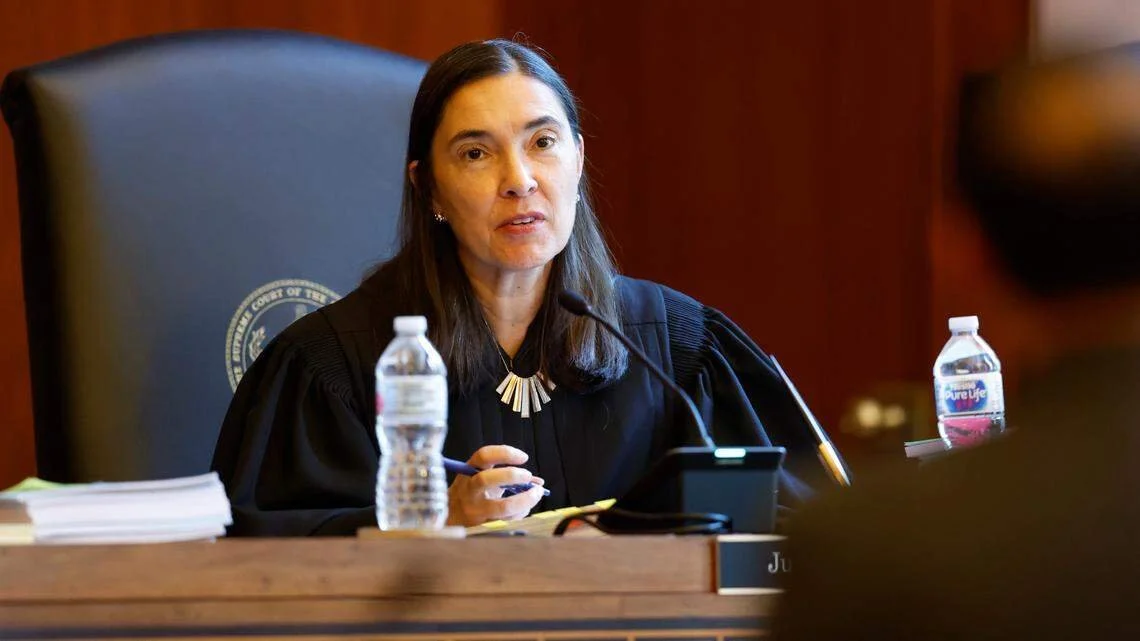
I want people to remember that I was part of the majority in 2022 that said: Following precedent, it's the court's responsibility to enforce the constitutional right if the legislature won't allocate the funds. We've deferred to the legislature for years and years. And ironically, the majority opinion that was just issued puts children and their parents in this bind where they say: “Well, you have to defer, but if you defer too long, then it's too late; you haven't sued fast enough.” Sort of a “heads I win, tails you lose” kind of situation, right? It was wrong for the court to reverse that earlier ruling. So essentially what our court said is: Despite the fact that trial courts have found that not every child has access to a sound, basic education as they are entitled to under the constitution, there is no relief. There's no remedy. There's nothing the courts will do to guarantee that right. The courts abandoned the rights of voters when we overturned the partisan gerrymandering decision and said, “No, actually, we're not going to hold the General Assembly to drawing fair districts.” We abandoned voters when the trial court found that the voter ID law passed by the General Assembly was intentionally racially discriminatory. Initially, the 2022 court – the Democratically controlled court – said, “Well, if it's racially discriminatory, you can't use it.” The new court came in and reheard the case and said, “Actually, we think it should be harder to prove racial discrimination.” Abandoning voters, abandoning children, refusing to enforce their rights, and refusing to carry out its role in our government as a check and balance on the other two branches.
The heart of the Leandro decision was this technicality. The very first sentence of the majority decision is: “We are called upon today to decide whether or not there's subject matter jurisdiction.” And you know, immediately, your eyes are going to glaze over. What are they talking about? Subject matter jurisdiction? Basically, they're saying the parents and school districts that brought the lawsuit didn't adequately identify that they were challenging the entire system. They weren't challenging the law on its face. And, in my dissent, I point out in the complaint all the places where they make clear they're challenging the system of school funding and saying that this system is not resulting in a sound, basic education for all of our children. It seems to be manifestly unfair to the parties, at this stage in the litigation, to rely on that kind of rationale when it's not supported by what is on paper in the complaint. Right there, for anyone to read.
The way the media has covered the case, they've talked about how it's the General Assembly's role to decide education policy. Absolutely. The General Assembly has a role. But the state constitution says in the first article that all people of North Carolina have the right of the privilege of education and that that should be guarded and defended by the state. Which doesn't just mean the General Assembly. It means the state. And there are plenty of other rights that we enforce. We don't say, “Oh, it's up to the General Assembly to decide transportation policy,” for example. It’s just misdirection, I think, to say, “Oh, the General Assembly should be the ones that decide education policy.” Because yes, of course they should, but they also have obligations under the constitution to uphold rights.
What this means on the ground, when I go around the state and I see schools being closed, when I hear stories of classrooms without the kind of qualified teachers they need because there's just so many good teachers leaving the system, when I understand that our state has dropped to 49th in per-pupil spending, this is not about policy. This is about whether or not we're going to have a public education system at all.
On Her Judicial Philosophy
My goal has always been to live up to the promise of equal justice under the law. And unlike my opponent, who calls herself a constitutional conservative, I am not beholden to any particular political ideology. I am there to apply the law fairly and equally to everyone, and that's my philosophy.
On Her Pitch to Voters in 2026
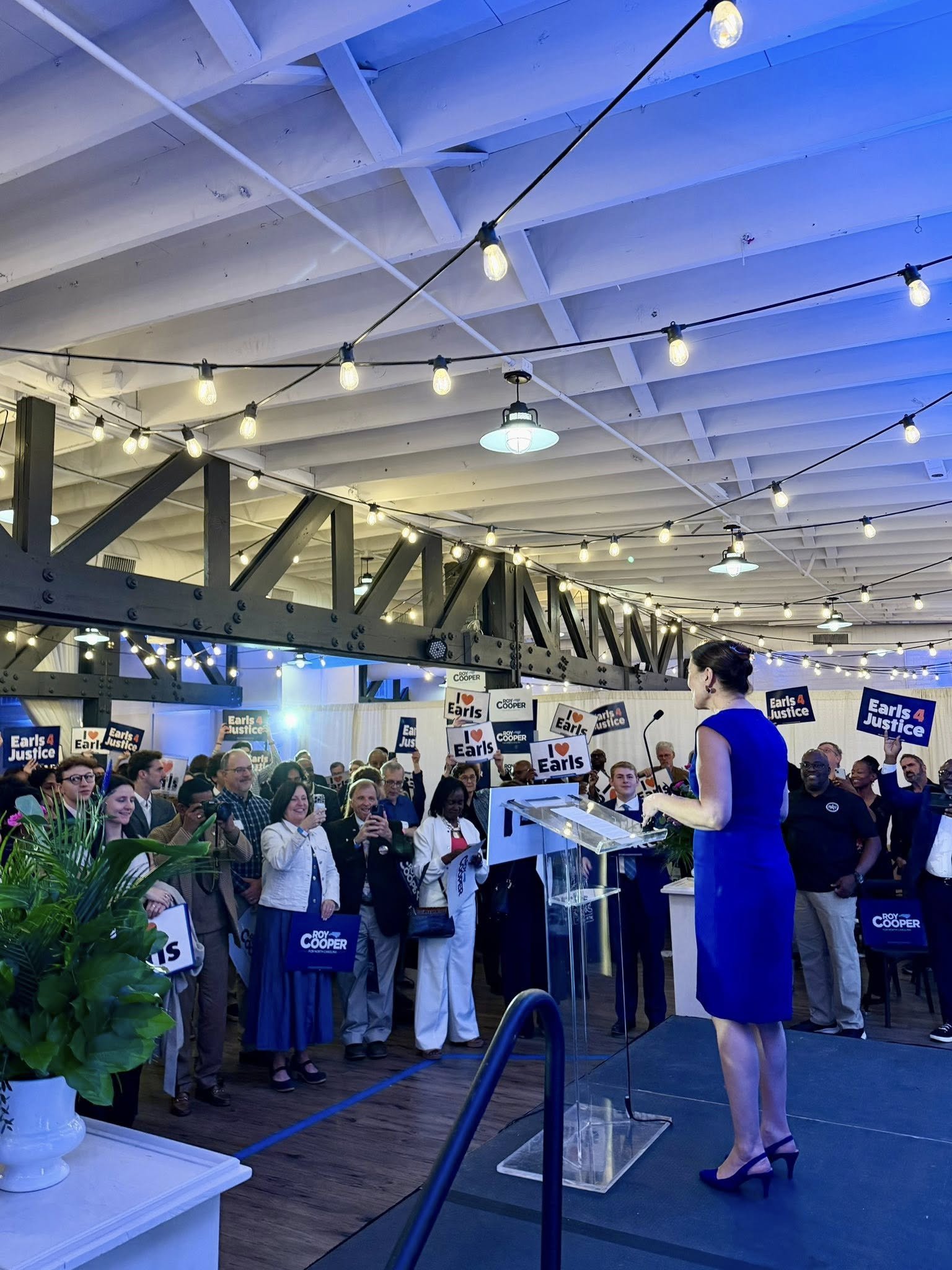
My plea is that I have the opportunity to continue that goal of equal justice under the law. And, in particular, the role of the court to hold the other two branches of government, the executive and the legislative branches, to the state constitution. And that means, for example, that when the legislature draws districts, they have to do so in a way that's fair to all voters.
Whatever your political affiliation is, if you agree that districts should be fair, understand that in 2022, when our court ruled that way, it was a very non-partisan decision. We said: “Whichever party does it – Democrats, Republicans – does not matter. We need to have districts that fairly reflect the voting patterns of people in the state.” And so, for independent and unaffiliated voters, you know, the same point. The districts should, however they decide to vote when they go into the voting booth, be drawn in a way that their vote carries the same weight as everyone else in the state. And when you have districts that are gerrymandered, the voting strength of the disfavored party, whichever it is, it's not the same. The way the political scientists discuss it, they talk about translating votes into seats in the governing body. If you're in a gerrymandered system, and you're the party that's disfavored, you can't translate your votes into representation.
We were founded on no taxation without representation. I tell people, if you're worried about what's happening in Washington, understand that if we had kept the 7-7 [U.S. House] delegation [in N.C.] that we had in 2022 when districts were drawn under the court order that required them to be fair, then today the U.S. House of Representatives would be in the control of Democrats, and there would be some checks and balances at the national level. But equally important, I hope voters will realize that what happens at the state level matters tremendously. And in 2024, our most recent elections, more people voted for Democrats statewide, if you just add up all the votes for state House and state Senate. And yet, the imbalance is recognized when we understand that the state Senate has a veto-proof [Republican] majority. Republicans in the state House lack just one vote of having a veto-proof supermajority. That just does not reflect how people are voting. If you believe in the importance of having a system of government with checks and balances, if you believe that the court's function is to guarantee and enforce your rights, and if you care about having people on the court with a demonstrated track record of standing up for people's rights, then I ask for your vote.
My opponent is a member of the legislature currently. She's voted for many of the laws that our prior court found to be unconstitutional, that our current court has upheld. And her career has been about taking away the rights that I have been standing up to defend. She led the effort to impose the 12-week abortion ban. She has voted for gerrymandered maps. She voted for the voter ID requirement. We should consider whether we need yet another legislator voting on whether the laws that they voted for are constitutional or not. There should be some independence. And we already have one former legislator, Tamara Barringer, and we have Phil Berger Jr. on our court [who is the son of the Senate leader]. And we have a demonstrated record of the current court majority rubber stamping whatever the General Assembly does.
On the Important State Court of Appeals Seats Up for Grabs This Fall
I always like to talk about the Court of Appeals because it is so vitally important. It is a 15-member court. All of those judges are elected statewide. And right now, on that court, there are only 3 Democrats, out of 15, and all 3 of those seats are up this year. If we want any kind of balance on that Court, it’s vital to keep those seats. Judge Toby Hampson is running to keep his seat. Judge John Arrowood is running to keep his seat, and Judge Christine Walczyk, a district court judge from Wake County, is running for the third seat. Judge Allegra Collins is retiring.
This year, we have to hold the line. But just as we can flip the N.C. Supreme Court in 2028, the Court of Appeals will see five Republican seats up for election in 2028. And if Democrats are successful that year, there would be much more balance on that court.
The Court of Appeals hears a lot more cases than our court does. Last year, we heard 80 cases. They issue literally hundreds of opinions. They have an important role in setting what the laws are. In our state, most cases only are heard in that court; they don't come to our court. And I would also say that it's a valuable way to get experience to come on our court.
I think it's interesting that my opponent has never argued a case in our court, and I actually think that having litigation experience and appellate experience, in particular, is valuable. We should have experienced people on our Court. So the Court of Appeals is one way to build experience for folks who, ultimately, might be joining the Supreme Court.
On What She’s Hearing as She Traverses the State and Talks to Voters
I'm hearing from people who are very concerned about public education and our schools. Very concerned about gerrymandering and the fairness of our democracy. For the folks who did receive information that their ballots were going to be thrown out or who were otherwise impacted by Justice Riggs' election, a lot of concern about what will happen in 2026. Will it be fair? Will voters' ballots be challenged?
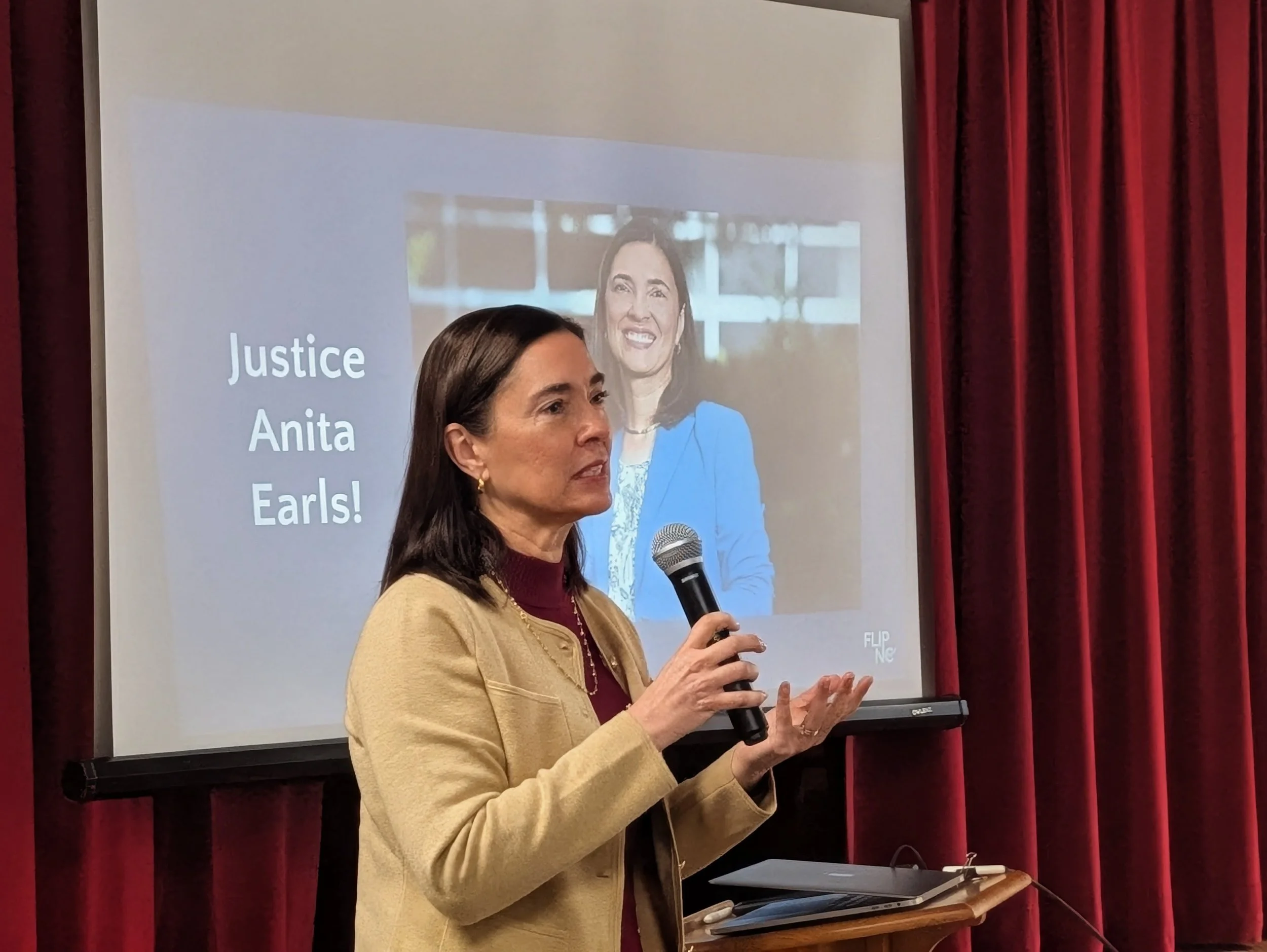
And I think that's a legitimate concern because the N.C. Supreme Court said that the votes of military and overseas voters should be thrown out. Four members of our court ruled that way. The federal court said that ruling violated equal protection and due process under federal law. And that's why, ultimately, Judge Griffin conceded, and Justice Riggs was sworn in. But the federal court said: While you can't change the rules of the election after the election, you can change them before the next election. So the rules that [Griffin] was seeking to change are now in effect. And that means people who don't have the last four [digits] of their social security number or their driver's license number in their voter registration database, you have to take the further step of checking the registration repair list, which is on the Board of Elections website. Anyone can search it. You can search anyone's name. You can search by county and get a list of all the voters in your county who have not, quote unquote, repaired their registration.
You’ve got to ask the question: Why does that matter? Why do we need to have the last four of our social or driver's license in our voter registration database? The Board of Elections has been doing database matching between the voter rolls and other databases. And they've now sent letters to 241,000 voters across the state saying these are voters who have this data in their registration, but for whatever reason, it didn't match with the other database, [maybe] because someone got married and changed their last name. Women, young voters, voters of color are the ones most often on these lists. And those folks are getting these intimidating letters saying that there's a discrepancy, and please contact us. And furnishing false information in response to this notice is a felony. It’s a very intimidating letter to get.
I'm worried that if there's a close election, the losing candidate might try to challenge voters on that basis. I'm also very concerned because the state board of elections has changed the process for challenging a voter based on citizenship. We may see voters with what are considered Hispanic surnames or even just foreign-sounding surnames being challenged as not citizens. There are signs that there may be real cause for concern. There’s multiple ways to prevent that. I am really thrilled with all the efforts that volunteers are engaging in right now to get all those voter registration files in order, so that people can vote a regular ballot. I also would say people should get registered now before the SAVE Act [potentially passes], before the federal government swoops in and changes what you have to produce in order to register.
I hope it’s energizing for people to realize that there's a strong movement underway to protect our right to vote and to protect our democracy. People are engaged in reaching out to those voters, making sure people are able to vote, and being ready to see what we have to do to protect the vote the day after the election, if it's close.
On Potentially Flipping the State Courts in 2028
Justice Riggs and I are both committed to getting back to a fair court. And that means that she is continuing to work this year. She is out and about, talking to voters. And I will continue this work beyond November. Neither one of us wants to be in a 5-2 minority. We understand the longer-range vision, and we're committed to that.
On Ways to Get Involved
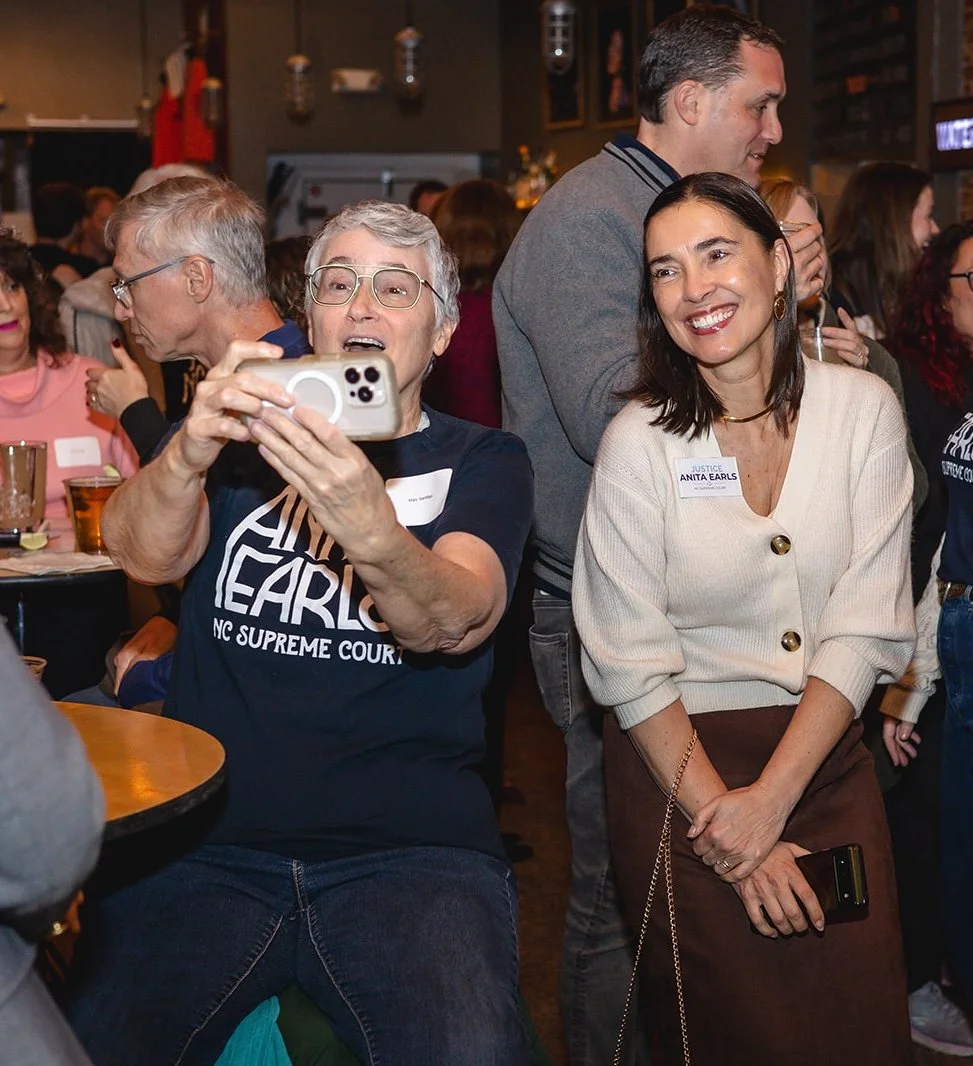
Justice Earls selfies with a FLIP NC volunteer at FLIP NC’s 2026 launch party
Yesterday, I was at Wake Forest University, speaking to the Wake Forest Dems. And afterward, this young woman introduced herself and said, “Well, I just want you to know, I've been working on your campaign, and I've been making phone calls for you.” And I was just so thrilled. It meant so much to me. And she's like, “Well I'm just doing the grunt work.” And I told her, “No, you’re doing the important work.” It takes all of us, and we are all in this together. That really was so heartwarming and encouraging.
Volunteers can go to earls4justice.com. Sign up to get my newsletter, to volunteer. I'm building a grassroots campaign, which means every contribution helps. My median contribution is, like, $50. Those $15 and $25 contributions really make a difference. But more importantly, find ways to reach your networks. Whether it's an email chain or a listserv or a WhatsApp group or followers on a social media platform. Everybody has some kind of reach in some kind of way.
My husband doesn't do social media, but he's got his little text chain, and when something happens, he's texting like 25 other people to let them know about it, right? Please tell people why voting for judges really matters, why this judicial race in 2026 is important for the future of democracy in North Carolina and in our country. And to not underestimate the power that you can have when you can multiply your own voice; it will really make a difference.
Contact my campaign if you need information from us. If someone asks you a question about the courts and you want to try to answer it for them, email us and we'll get that information to you. If there are opportunities to come and speak to groups, especially groups that aren't already fully politically engaged, that would also be really valuable, whether it's a student group or some other type of organization. I appreciate that people are frustrated by and, quite frankly, afraid of and repulsed by how divisive our politics are right now. But the only way to deal with that is not to check out but is actually to lean in – and to find how to reach people. Because there's just so much at stake.
On Ways to Get Engaged Outside of Her Campaign
I want to thank you for what FLIP NC is doing. I love the way in which you are data-driven, figuring out what works, so when folks volunteer with you, they can be assured that they're going to do something that you have already proven is going to be effective. And I always think about that as a candidate. Because, while I know I can outwork anybody, I also know I have to work smarter. It's not only about working harder; it's about working smarter. And that's what you guys do. So thank you.
I appreciate all the volunteers and all the different groups across the state. I want people to know that if a political campaign isn't how you want to get involved, there are so many groups that are doing work to improve our democracy in so many different ways, whether it's Democracy North Carolina, ACLU, Common Cause, Southern Coalition for Social Justice, FLIP NC. There's just so many different ways to get involved with groups that are doing great work. You can volunteer with the North Carolina Democratic Party, in so many ways. They really need help, whether it is organizing a precinct or other types of voter outreach. I encourage people to think about what they enjoy doing – what is fun?
On What Is Providing Her Hope and Joy These Days
Children, my grandchildren, young people – they're our future. They're the ones with energy and vision and enthusiasm and hope. That’s where I draw my inspiration. I have two grandchildren, 9 and 13, and then my youngest grandchild is turning 1. Oh my gosh. I'm so excited that he and my younger son and daughter-in-law are moving back to the Triangle. They live in LA right now, but they're moving back in August. So they'll be able to vote for me, but also I'll get to hang out with Cameron, my youngest grandchild. That's what gives me joy.
North Carolina-Themed Speed Round
Favorite N.C. Attraction or Landmark
I just like anything in the mountains. Anywhere in the mountains, and I'm happy.
Favorite Annual Tradition in N.C.
I love the Fourth of July celebration at Stagville Plantation in Durham because they do a community reading. You just show up and sign up, and you can read part of Frederick Douglass' Fourth of July speech. Hearing those words in that setting – Stagville Plantation still has some of the buildings that housed enslaved persons. And hearing those words from friends and neighbors of all ages and races and backgrounds is really moving.
Favorite N.C./Southern Food
I love hush puppies. Saltbox in Durham has the honey hushpuppies, which are good, but I don't need to have honey on them. They can just be plain. I love them.
Favorite Way to Enjoy N.C.’s Great Outdoors
Hiking. In my younger days, I would camp. I haven't done that for a while – but just go for a walk in the woods somewhere. Ideally, if there's a body of water, whether it's a river or a lake or a stream, that's an added plus.
Favorite Artist or Celebrity Associated with N.C.
Rhiannon Giddens. She is an incredible, accomplished musician and artist and genius. She got a MacArthur Genius Grant. She fosters so many other artists, and she's just amazing. From Greensboro.
Favorite Book or Movie Associated with Our State
I live in Durham. Bull Durham.